Every parent knows that keeping kids engaged can feel like trying to herd cats on roller skates. But fear not! Developmental activities for kids are here to save the day—and sanity. These activities not only entertain but also boost essential skills like problem-solving, creativity, and social interaction. Who knew learning could be as fun as a game of hide and seek?
Importance Of Developmental Kids Activities
Developmental activities play a critical role in children’s growth. These activities promote a range of skills necessary for their overall development.
Cognitive Development
Cognitive development significantly benefits from engaging activities. Playing with puzzles cultivates problem-solving abilities. Learning through games enhances memory and concentration. The use of educational apps stimulates critical thinking and creativity. Children exposed to various activities demonstrate improved academic performance as they develop these fundamental cognitive skills.
Physical Development
Physical development thrives through active participation. Outdoor games encourage coordination and balance, essential for gross motor skills. Activities such as dancing improve flexibility and body awareness. Fine motor skills enhance through crafts and building blocks. Regular engagement in these activities contributes to healthier, stronger children and establishes lifetime habits.
Social Skills Enhancement
Social skills enhancement is vital for children’s interpersonal interactions. Group activities foster teamwork and cooperation. Sharing toys and taking turns instills patience and understanding. Role-playing games help children navigate social scenarios and build empathy. As kids engage with peers, they develop essential communication skills and emotional intelligence.
Types Of Developmental Kids Activities
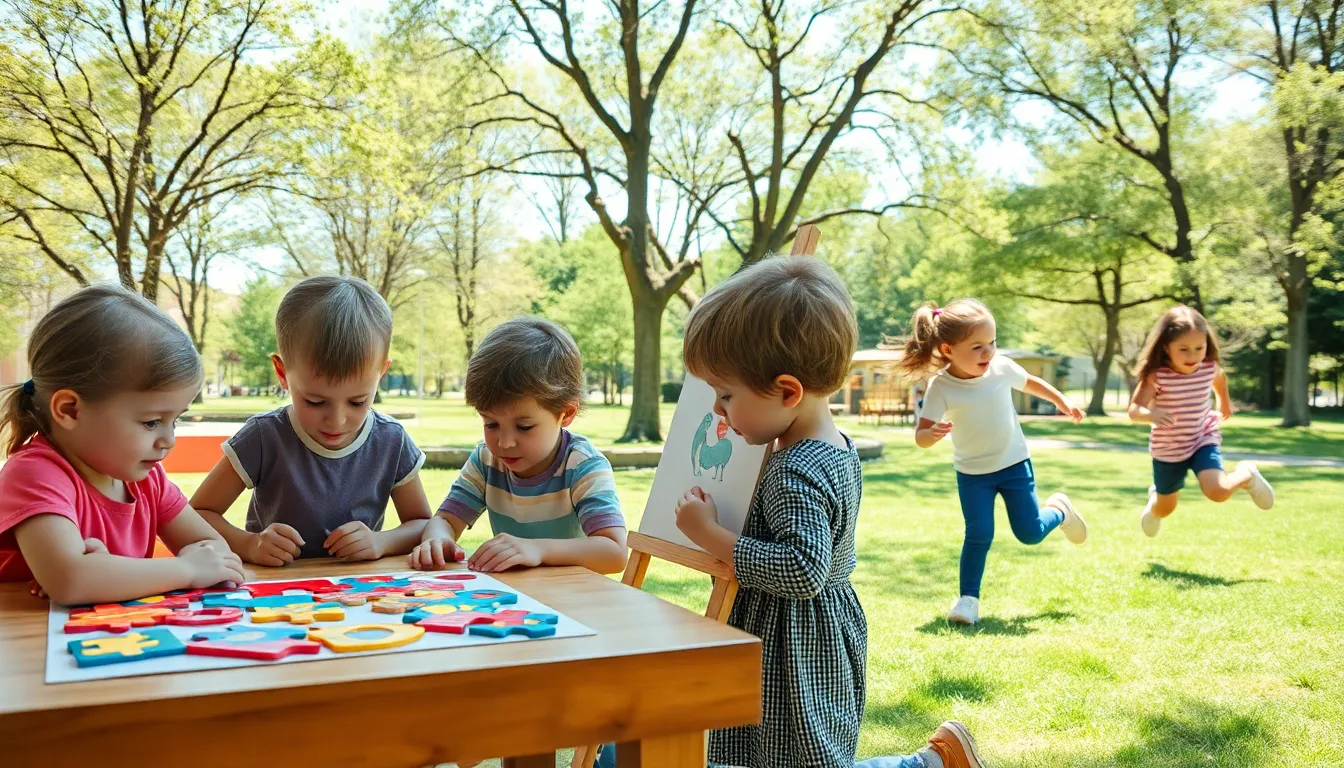
Various types of developmental activities engage children while promoting essential skills. Each activity category targets specific areas of growth, enhancing overall development.
Indoor Activities
Indoor activities play a crucial role in cognitive and motor skill development. Puzzles improve critical thinking and problem-solving capabilities. Educational games sharpen memory through interactive learning. Simple tasks like sorting shapes and colors strengthen hand-eye coordination. Storytelling promotes language skills and imagination. Many parents utilize these activities during inclement weather, ensuring children remain engaged and stimulated.
Outdoor Activities
Outdoor activities offer physical benefits and encourage exploration. Running games foster cardiovascular health and enhance coordination. Nature walks provide sensory experiences, contributing to environmental awareness. Group games, such as tag, cultivate teamwork and social interaction. Activities like scavenger hunts stimulate curiosity and critical thinking. Engaging in outdoor play helps children develop resilience and confidence in their physical abilities.
Creative Arts And Crafts
Creative arts and crafts enable self-expression while enhancing fine motor skills. Drawing and painting encourage imagination and creativity. Craft projects, such as building models, improve hand dexterity and focus. Collaborating on group art pieces promotes teamwork and interpersonal communication. Using various materials introduces concepts like color theory and texture. These activities enrich children’s emotional expression and cognitive flexibility through artistic exploration.
Choosing The Right Activities
Selecting suitable activities for children’s developmental needs fosters engagement and growth. Understanding the child’s individual context is vital for effective activity choice.
Age-Appropriate Considerations
Choosing activities based on age ensures that children find them engaging and beneficial. Developmental milestones vary with age, making it important to align activities with those milestones. For instance, toddlers can enjoy simple puzzles that enhance fine motor skills, while preschoolers may engage in interactive story sessions to build comprehension. School-aged children thrive with more complex challenges like strategy games that encourage critical thinking. Monitoring age-related progress helps parents select suitable activities that align with children’s evolving capabilities.
Interests And Preferences
Incorporating children’s interests makes activities more appealing and effective. Identifying what excites a child—like animals, space, or art—can help parents tailor experiences around those themes. For example, a child fascinated by nature may enjoy outdoor scavenger hunts, boosting both exploration and learning. Similarly, a kid with a passion for music might benefit from rhythm-based games, promoting creativity and timing. Prioritizing preferences not only enhances engagement but also encourages children to participate actively in their development.
Benefits Of Engaging In Developmental Activities
Engaging in developmental activities brings numerous benefits for children. These activities significantly contribute to critical skills enhancement and emotional growth.
Improved Learning Outcomes
Children participating in developmental activities demonstrate improved learning outcomes. Cognitive skills such as memory and concentration receive a boost from educational games and puzzles. Enhanced problem-solving abilities emerge as children tackle diverse challenges. Engaging in these activities fosters creativity, encouraging innovative thinking through artistic and imaginative tasks. Additionally, age-appropriate activities align with developmental milestones, ensuring children remain captivated as they learn. Parents observe pronounced improvements in academic performance, especially in subjects requiring analytical thinking and comprehension. As children build connections through engaging play, their thirst for knowledge naturally grows.
Enhanced Emotional Wellbeing
Participating in developmental activities supports enhanced emotional wellbeing. Children develop self-esteem and confidence through successful completion of tasks. Social interactions during group activities foster teamwork and patience; they learn to navigate relationships and communicate effectively. Role-playing activities encourage empathy, allowing children to understand various perspectives and emotions. Finding joy in creative expressions through arts and crafts promotes emotional regulation, helping manage feelings. Active engagement in mixed-age play encourages emotional resilience, as interactions with peers provide valuable life lessons. Overall, children experience emotional growth, resulting in improved mental health and stability.
Developmental activities play a vital role in nurturing children’s growth and engagement. By focusing on cognitive, physical, and social skills, these activities create a well-rounded approach to learning. Parents can foster their children’s development by selecting age-appropriate tasks that align with individual interests and milestones.
Encouraging participation in both indoor and outdoor activities not only entertains but also builds essential skills that will benefit children throughout their lives. Embracing a variety of developmental activities ensures that children remain engaged and excited about learning while cultivating their creativity and emotional intelligence. Prioritizing these enriching experiences will help lay a strong foundation for their future success.