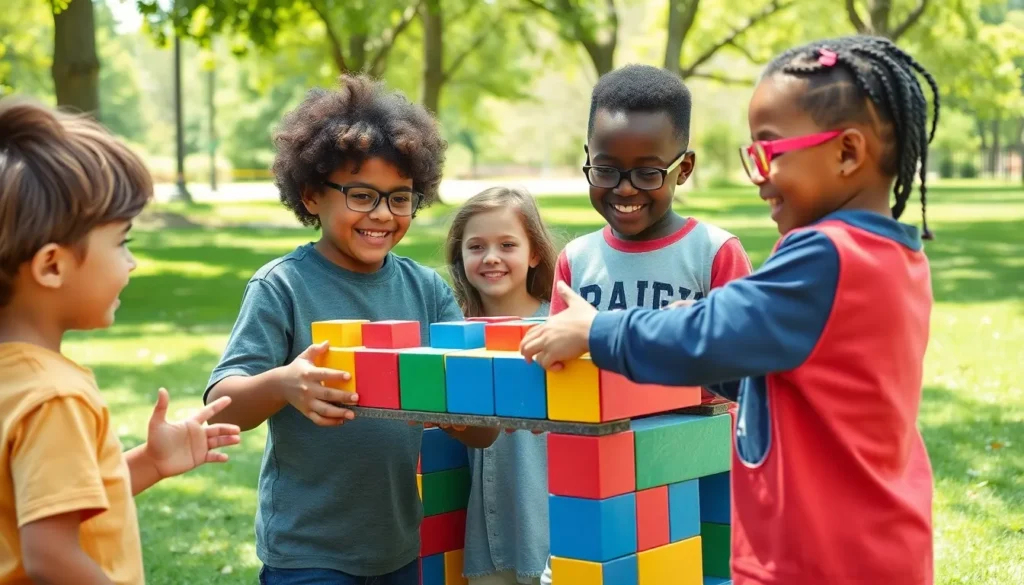
In a world where social skills can make or break a future CEO, teaching kids how to navigate friendships, share toys, and handle those pesky playground politics is more crucial than ever. Think of social skills as the secret sauce that helps children thrive in school, make friends, and even win at hide-and-seek. It’s not just about saying “please” and “thank you”; it’s about building the confidence to engage and connect.
Imagine a child who can charm their way through a group project or diffuse a sibling squabble with a well-timed joke. Sounds like a superhero, right? With the right guidance, every child can develop these essential skills. Dive into the world of child social skills and discover how nurturing these abilities can set the stage for a lifetime of success and happiness. After all, who wouldn’t want their little one to be the life of the party?
Importance of Child Social Skills
Child social skills play a crucial role in overall development. These skills enable children to interact positively with peers and adults, fostering a sense of belonging. Effective communication and cooperation enhance their ability to build friendships. As children learn to express themselves clearly, they become better equipped to convey their thoughts and feelings.
Awareness of social cues, such as body language and tone of voice, enhances a child’s interactions. When children understand these signals, they respond appropriately, making their engagements more meaningful. Strong social skills also contribute to emotional intelligence, allowing children to empathize with others’ experiences.
Research shows that children with well-developed social skills achieve better academic performance. They engage more actively in class discussions and collaborate effectively on group projects. Confidence gained from social interactions lays the foundation for successful teamwork in various settings, including school and extracurricular activities.
Fostering social skills early on establishes a solid framework for future relationships. A supportive environment that encourages children to practice these skills enhances their adaptability to different social situations. Consistent opportunities to engage with peers further improve their interpersonal abilities.
Nurturing child social skills results in numerous long-term benefits. Children who develop strong social capabilities tend to exhibit greater self-esteem, resilience, and academic success. Prioritizing social skills in childhood ensures a well-rounded approach to their emotional and social growth.
Key Components of Child Social Skills
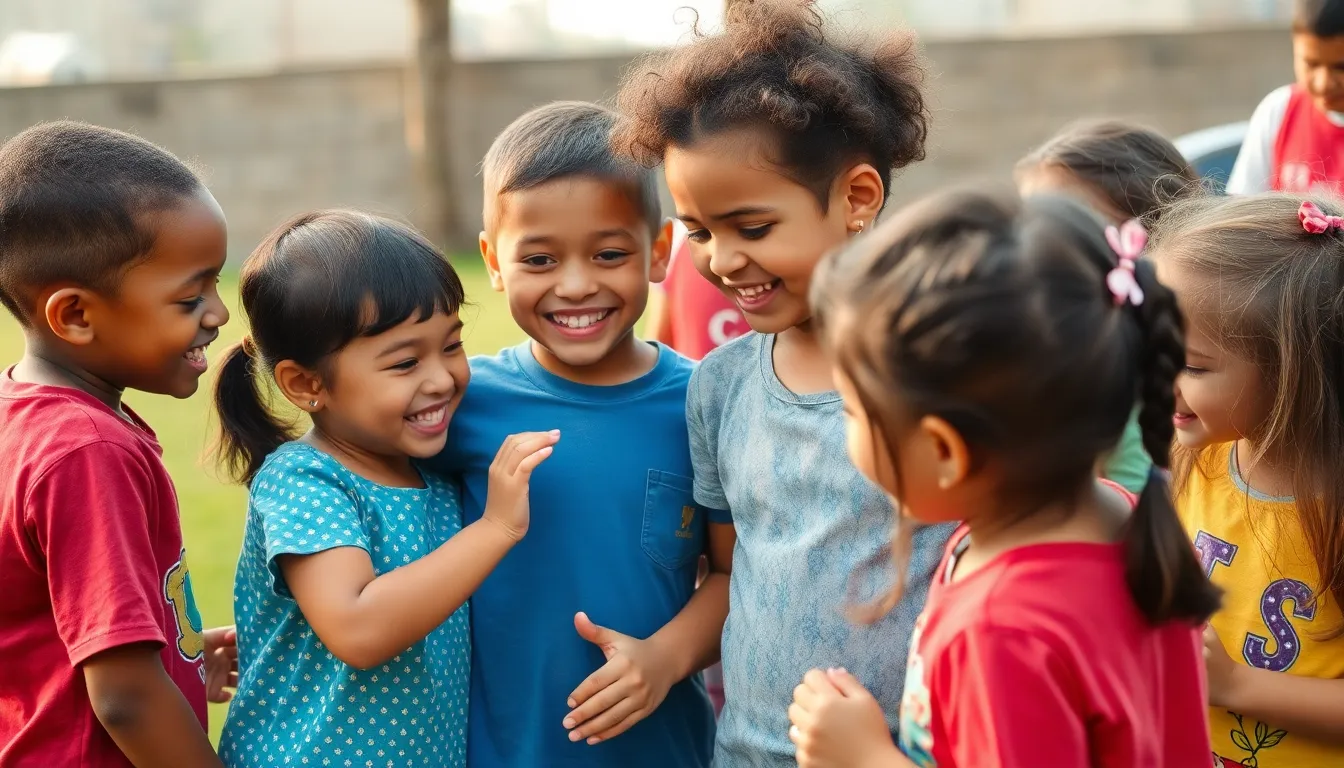
Child social skills consist of various essential components that contribute to effective interactions. Communication, emotional intelligence, and conflict resolution stand out as key areas for development.
Communication Skills
Communication skills encompass both verbal and nonverbal forms of expression. Children learn to articulate thoughts and feelings clearly, conveying messages to peers and adults. Moreover, active listening plays a crucial role, enabling them to understand others better. They also pick up on social cues, enhancing their ability to engage meaningfully. Engaging in group activities fosters these skills, allowing children to practice sharing ideas and collaborating with others. Research shows that children who master communication skills excel in academic settings and foster stronger friendships.
Emotional Intelligence
Emotional intelligence involves recognizing, understanding, and managing one’s emotions while empathizing with others. Children develop this intelligence by identifying feelings in themselves and peers, which promotes healthier interactions. Developing empathy helps them relate to others, building supportive friendships and enhancing social connections. When children navigate their emotions effectively, they become more resilient in challenging situations. Programs focusing on emotional development produce students who achieve greater success in school and life, indicating the importance of fostering this skill early on.
Conflict Resolution
Conflict resolution skills prepare children for managing disagreements constructively. Teaching them to approach conflicts calmly enables a constructive dialogue rather than escalating issues. Strategies like negotiating, compromising, and finding common ground become essential for effective resolution. They learn to express their viewpoints while considering others’ perspectives, which fosters mutual respect. Research emphasizes that children adept at resolving conflicts face fewer social issues and demonstrate improved collaboration in group settings. Prioritizing conflict resolution equips them for healthy relationships throughout their lives.
Factors Influencing Child Social Skills
Various elements shape a child’s social skills. Understanding these influences helps parents and educators facilitate effective development.
Family Environment
Family dynamics significantly impact social skill development. Supportive families create secure emotional environments, encouraging children to express themselves. Consistent interaction with responsive caregivers fosters communication skills. Additionally, open discussions regarding emotions promote emotional intelligence. Engaging in family activities, such as game nights, enhances cooperation and teamwork. Research correlates positive family environments with higher levels of social competence in children.
Peer Interactions
Peer interactions offer real-world opportunities to practice social skills. Engaging with diverse groups helps children navigate different social situations. Frequent playdates or group activities expose kids to sharing, negotiation, and empathy. Friends serve as models, influencing behaviors like communication styles and conflict resolution. Regular peer engagement contributes to confidence in social settings. Studies show that children with rich peer interactions demonstrate better adaptability and form strong friendships.
Cultural Context
Cultural backgrounds shape how children learn and express social skills. Various cultures prioritize different values, affecting behavior with others. For instance, collectivist cultures emphasize group harmony, while individualist cultures focus on personal achievement. Awareness of cultural nuances allows children to adapt their social approaches effectively. Educators and parents play crucial roles by introducing diverse perspectives. Exposure to multiple cultures enhances empathy and broadens social understanding, contributing to well-rounded social skill development.
Strategies to Enhance Child Social Skills
Enhancing children’s social skills requires intentional strategies. Several methods can significantly improve their ability to interact and connect with others.
Encouraging Play
Play serves as a fundamental aspect of social development. Structured and unstructured play opportunities allow children to engage with peers. Through imaginative games, they learn essential skills like sharing and teamwork. Outdoor activities permit exploration in a natural environment, fostering communication. As a result, children develop confidence in approaching others.
Role-Playing Scenarios
Role-playing scenarios simulate various social situations, promoting real-world skills. Engaging in these activities offers children a safe space to practice responses. They can explore different perspectives and emotions while navigating conflicts. Parents and educators can guide discussions about appropriate behavior. This practice leads to greater empathy and conflict resolution capabilities.
Social Skills Training Programs
Social skills training programs provide targeted instruction in interpersonal abilities. Many organizations offer workshops designed specifically for children. Programs often incorporate interactive activities that emphasize communication and emotional intelligence. By participating in these structured sessions, children practice behaviors in an encouraging environment. Achieving competence in social interactions contributes to their overall self-esteem and resilience.
Prioritizing child social skills is crucial for their overall development and future success. By fostering effective communication emotional intelligence and conflict resolution abilities children can navigate social situations with confidence. A supportive environment that encourages peer interactions and family engagement lays the groundwork for meaningful relationships.
Implementing intentional strategies like play and role-playing further enhances these skills. As children learn to express themselves and connect with others they build resilience and self-esteem. Investing time and resources into developing social skills not only benefits children in their formative years but also sets them up for a fulfilling life ahead. Social competence is more than just a skill; it’s a vital component of a child’s emotional and social growth.