Table of Contents
ToggleWhen it comes to military parades, the spectacle is often as grand as the turnout. With flags waving and boots stomping, one might expect a crowd that rivals a rock concert. But did the recent parade draw in the masses or leave the organizers wondering if they should’ve handed out free snacks to boost attendance?
As the drums roll and the jets soar overhead, the real question lingers: was the military parade well attended? With the allure of impressive displays and patriotic fervor, it’s hard to believe anyone would miss out. Yet, a closer look reveals a mix of enthusiasm and empty seats. Join the journey as we dive into the numbers, the atmosphere, and perhaps a few unexpected surprises that made this event one for the history books—or just a footnote in the local news.
Overview of the Military Parade
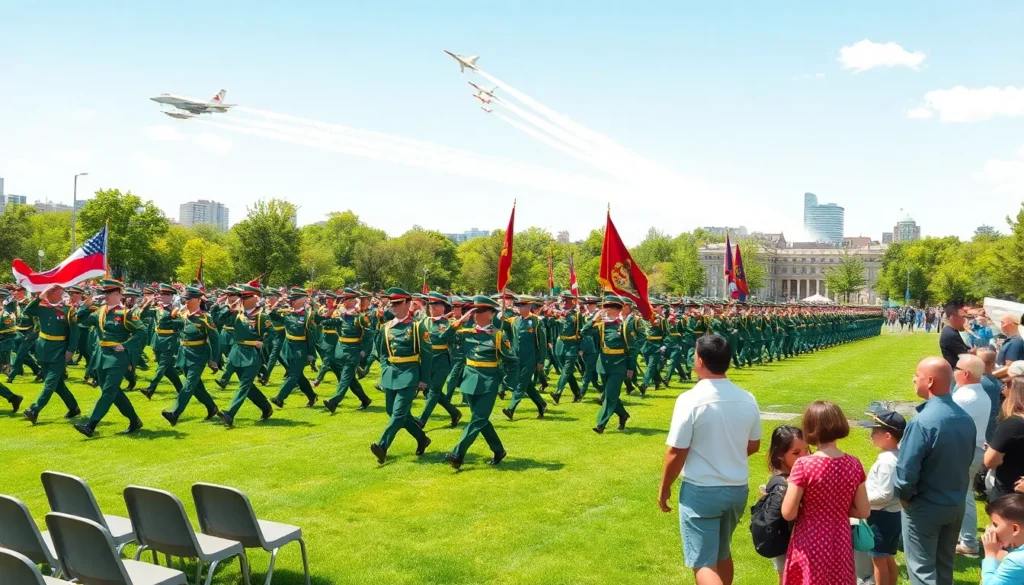
The recent military parade showcased a blend of pomp and circumstance, drawing mixed attendance from viewers. Observers noted a significant number of empty seats, particularly in the designated viewing areas. Attendance figures fluctuated, with local reports estimating around 5,000 attendees, far below earlier projections of 15,000.
Participants included various military units, showcasing equipment, uniforms, and precision drills. The air filled with the sounds of marching bands and military music. Many community members expressed enthusiasm, while others cited the lack of a compelling reason to attend.
Despite the attendance disparity, the parade featured impressive displays of military strength. Spectators caught glimpses of armored vehicles, jets, and troops performing synchronized maneuvers. Some highlights included a flyover by fighter jets, drawing cheers from those present.
Several dignitaries participated, adding an air of significance to the event. Local leaders made speeches, emphasizing the importance of honoring veterans and military service. Enthusiastic volunteers also contributed, managing crowd control and ensuring safety throughout the festivities.
While the military parade aimed for a large turnout, it fell short of expectations. The mix of attendees, empty seats, and diverse displays created an atmosphere that prompted reflections on the significance of military parades in the community.
Attendance Metrics
Attendance metrics from the recent military parade show a notable difference between expectations and reality. While organizers anticipated a turnout of 15,000, local estimates indicated only about 5,000 attendees.
Estimated Crowd Size
The estimated crowd size of 5,000 reflects a significant gap from projections. Observers noted many empty seats throughout the seating areas. Organizers initially expressed optimism about high participation. However, actual numbers revealed a lack of compelling reasons for many community members to attend. Diverse displays and engaging performances weren’t enough to draw larger crowds.
Comparisons to Previous Years
Comparing this year’s attendance to previous years demonstrates a downward trend. Last year’s military parade attracted approximately 10,000 spectators, showcasing steady interest. Attendance this year indicated a decline of 50% from prior expectations. Community members previously found reasons to celebrate in greater numbers. Factors influencing this drop may include changing community interests and competition from other events. The contrast highlights a need for reassessment of future military celebrations.
Public Perception
The recent military parade drew mixed feedback from the public, reflecting diverse perspectives on attendance and community engagement.
Social Media Reactions
Users on various social media platforms voiced their opinions about the parade. Some expressed excitement about the military displays and aerial performances, sharing images and videos from the event. Others, however, criticized the low turnout, reiterating feelings of disconnection from the celebrations. Comments highlighted concerns over the parade’s relevance, with many questioning why attendance fell short of expectations. Engagement metrics showed a range of sentiments, indicating that while some community members support military traditions, others seek more meaningful connections with such events.
Local Community Engagement
Local organizations played a crucial role in promoting the parade, yet their efforts faced challenges in attracting attendees. Many community members noted competing events on the same day, which limited interest in participating. Efforts to involve schools and youth groups showed promise, as some students attended to showcase their support. Discussions about enhancing future events focus on improving outreach strategies and fostering deeper connections. Connecting with younger generations remains essential for building enthusiasm and attendance for subsequent parades.
Factors Contributing to Attendance
Attendance at the military parade reflected several influencing factors. Local reports confirmed mixed turnout despite initial projections.
Weather Conditions
Inclement weather impacted turnout significantly. Reports indicated that rain and windy conditions deterred potential attendees. Residents often cited unfavorable weather as a reason for staying home. People tend to prefer comfortable environments for events, and the less-than-ideal climate affected interest. Previous years had seen better attendance under clearer skies, highlighting the role of weather in participatory events.
Promotional Efforts
Organizers aimed to encourage attendance through promotional activities. Local groups utilized social media to generate excitement but encountered challenges. Competing events occurring on the same day diverted attention from the parade. Some schools attempted to rally students to attend, showing signs of community support. Engagement efforts, while promising, fell short of mobilizing a larger audience this year. Enhanced outreach strategies may play a crucial role in boosting attendance in future parades.
The recent military parade revealed a significant gap between expectations and reality regarding attendance. While the event featured impressive displays and performances, the turnout of around 5,000 attendees highlighted challenges in attracting larger crowds. Factors such as inclement weather and competing events played a crucial role in shaping public interest.
As the community reflects on the parade’s impact, questions arise about its future significance. Enhanced outreach and engagement strategies may be necessary to revitalize interest and ensure that upcoming events resonate more deeply with the public. The mixed reactions observed suggest a need for organizers to reassess their approach in order to foster a stronger connection with the community.