In the sprawling world of Westeros, family trees can look more like a tangled ball of yarn than a straightforward lineage. With houses rising and falling, alliances forming and breaking, and more betrayals than a soap opera, it’s easy to get lost in the chaos. If you thought your family gatherings were complicated, try keeping track of the Targaryens, Starks, and Lannisters—all while dodging the occasional dragon.
Overview of Games of Thrones Family Tree
The family tree of Game of Thrones encompasses numerous characters across several houses, each contributing to the story’s depth. A significant branch belongs to House Stark, known for its honor and loyalty, which includes Eddard Stark, Catelyn Stark, and their children: Robb, Sansa, Arya, Bran, and Rickon.
House Lannister, another key player, features characters like Tywin, Cersei, Jaime, and Tyrion, each with their ambitions and secrets. Tying into this complexity, House Targaryen, with figures such as Daenerys and Viserys, brings dragons and history of conquest into the narrative.
These houses maintain intertwining relationships through marriages and alliances. For example, the Stark-Lannister alliance brings Catelyn Stark into the fold through her marriage to Eddard, highlighting not only family ties but also political strategy.
House Baratheon, with characters like Robert, Stannis, and Renly, adds further layers of intrigue, especially as the series unfolds their quest for power. Tensions often arise as allegiances shift, showcasing the unpredictable nature of Westeros politics.
Relationships frequently evolve, with betrayals and conflicts leading to dramatic consequences. Characters confront loyalty issues and navigate shifting alliances, echoing the intricate dynamics often found within families.
As the series progresses, various family members face challenges that test their bonds. Each character’s actions influence the broader narrative, contributing to the overall complexity of the Game of Thrones family tree.
Major Houses in Games of Thrones

Westeros’s political landscape revolves around several powerful houses, each contributing to the intricate story of alliances and rivalries.
House Stark
House Stark represents the North’s honor and duty. Eddard Stark, as the head, embodies loyalty and justice. Catelyn Stark, his wife, strengthens ties through her family connections. Their children, Robb, Sansa, Arya, Bran, and Rickon, navigate the challenges of their lineage. Stark’s motto, “Winter is Coming,” signifies caution and preparedness. This house often stands in contrast to the treacherous nature of other families, asserting its values amidst chaos.
House Lannister
House Lannister centers around wealth and political maneuvering in Westeros. Led by Tywin Lannister, this house showcases ambition and intellect. Cersei, Jaime, and Tyrion each play critical roles in the family’s quest for power. Their famous saying, “Hear Me Roar,” reflects their dominance. Lannisters are known for their cunning strategies and willingness to manipulate situations to their advantage. Tension often arises within the house, driven by sibling rivalry and differing ambitions.
House Targaryen
House Targaryen brings a legacy of dragons and fire to the narrative. Daenerys and Viserys are key figures, symbolizing the family’s volatile history. The Targaryens value their heritage and seek to reclaim the Iron Throne. Their motto, “Fire and Blood,” represents their fierce determination. Alliances formed through marriages often complicate their quest for power. The unique bond with dragons enhances their allure and threat in Westeros, making them a pivotal force in the story.
Key Relationships and Alliances
Westeros is marked by intricate alliances and marriages that define power dynamics. Families strengthen their positions through these connections, often intertwining destinies.
Marriages and Alliances
Marriages serve vital political purposes, exemplified by Catelyn Stark’s union with Eddard Stark, which unites Houses Stark and Lannister. The Targaryens also strategically marry to maintain power, as seen with Daenerys Targaryen’s betrothal to Khal Drogo. Additionally, the Baratheons assert authority through Robert Baratheon’s marriage to Cersei Lannister, linking two influential families. These relationships shape alliances across Westeros, reinforcing the interdependence among houses.
Betrayals and Conflicts
Betrayals often emerge from these alliances, unleashing chaos. Cersei Lannister’s actions against her husband, Robert, typify conflicting loyalties that fuel resentment. Eddard Stark’s trust in Cersei leads to dire consequences, demonstrating how misplaced faith can alter allegiances. Characters frequently face moral dilemmas, revealing hidden agendas and personal ambitions. The atmosphere remains charged with tension, as shifting loyalties obliterate previous alliances, resulting in explosive confrontations that define the narrative.
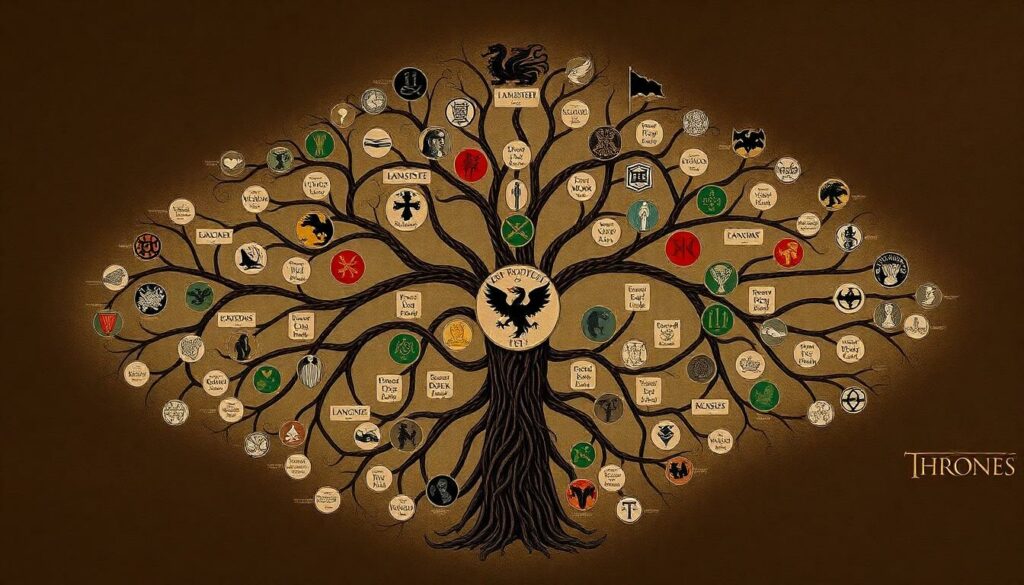
Visual Representation of the Family Tree
Visualizing the Game of Thrones family tree clarifies the intricate relationships between key characters. Diagrams showcase major houses like Stark, Lannister, and Targaryen, offering an intuitive look at lineage and connections.
House Stark appears prominently, with Eddard Stark, Catelyn Stark, and their offspring: Robb, Sansa, Arya, Bran, and Rickon grouped together. Family connections signify their core values of honor and loyalty, contributing to their distinguished identity.
Next, House Lannister displays figures such as Tywin, Cersei, Jaime, and Tyrion, illustrating familial ambition and secretive natures. Their relationships highlight rivalry and political cunning essential to their character arcs.
House Targaryen features Daenerys and Viserys front and center, linking the family to dragons and a storied legacy of conquest. Representing fire and blood, this house emphasizes the drastic measures taken to achieve power.
Intersections between these families reveal connections and political marriages beyond mere bloodlines. The marriage of Eddard and Catelyn not only solidifies their families but also sets the stage for significant plot developments.
Visual aids encapsulate how these marriages shape power dynamics in Westeros. Marriages like Robert Baratheon’s to Cersei Lannister exemplify how alliances can strengthen or cripple families.
These visual representations simplify the understanding of alliances and betrayals. For instance, Cersei’s actions destroy relationships, while Eddard’s misplaced trust leads to catastrophic repercussions.
Ultimately, illustrating the family tree enhances comprehension of shifting loyalties and moral dilemmas faced by characters, enriching the overall narrative complexity of Game of Thrones.
Character Development within the Family Dynamics
Character development plays a crucial role in understanding the dynamics of Westeros’ families. Eddard Stark embodies honor and loyalty, often clashing with his family’s expectations and the brutal reality of political life. Catelyn Stark navigates personal loss while fiercely protecting her children, highlighting maternal instincts that drive many decisions.
Sibling relationships often diverge within House Lannister, where rivalry shapes character trajectories. Jaime’s struggle between loyalty to Cersei and his evolving sense of honor adds depth. Tyrion’s intellect often battles societal perceptions, revealing a character built on resilience amid adversity.
The Targaryens showcase both strength and vulnerability. Daenerys grows from a timid girl into a formidable leader, driven by a desire to reclaim her family’s legacy. Viserys, in contrast, remains fixated on power, demonstrating the contrast between aspiration and ambition’s emptiness.
Each character grapples with moral dilemmas influenced by family ties and personal ambitions. Betrayals within families serve as turning points, as Cersei’s actions against her husband and Eddard present significant ramifications. Conflicts spiral, driving characters to make choices that rip apart loyalties.
Character arcs intertwine, with decisions casting long shadows on family dynamics. House Stark’s values challenge the Lannisters’ ruthlessness, shaping a landscape fraught with tension and shifting alliances. Visual representations of these families help clarify these complex interactions, underscoring how personal decisions affect broader narratives.
Overall, the interplay between family loyalty, ambition, and betrayal enriches the character development within Game of Thrones. Each interaction deepens the narrative, revealing the extent to which familial ties dictate the fate of individuals and the realm itself.
The intricate family tree of Game of Thrones serves as a captivating lens through which to understand the chaotic world of Westeros. Each house brings its own unique values and challenges to the forefront, shaping the narrative in unexpected ways. Characters navigate a complex web of alliances and betrayals that not only define their destinies but also impact the fate of the realm.
As viewers delve deeper into the relationships and moral dilemmas faced by key figures, they gain a richer understanding of how family dynamics influence power struggles. The visual representations of these connections further clarify the entangled relationships that characterize this epic saga. Ultimately, the family tree is more than just a structure; it’s a reflection of the themes of loyalty, ambition, and treachery that define Game of Thrones.